开放时间闭馆
|星期四, 十月 15, 2026Museo Nacional del Prado, Paseo del Prado, Madrid, Spain
返回 art history
artist-focus
Goya at Prado: Essential Works and Historical Context
A deep guide to Goya at Prado covering major paintings, political history, and emotional interpretation.
4/14/2026
20 min read
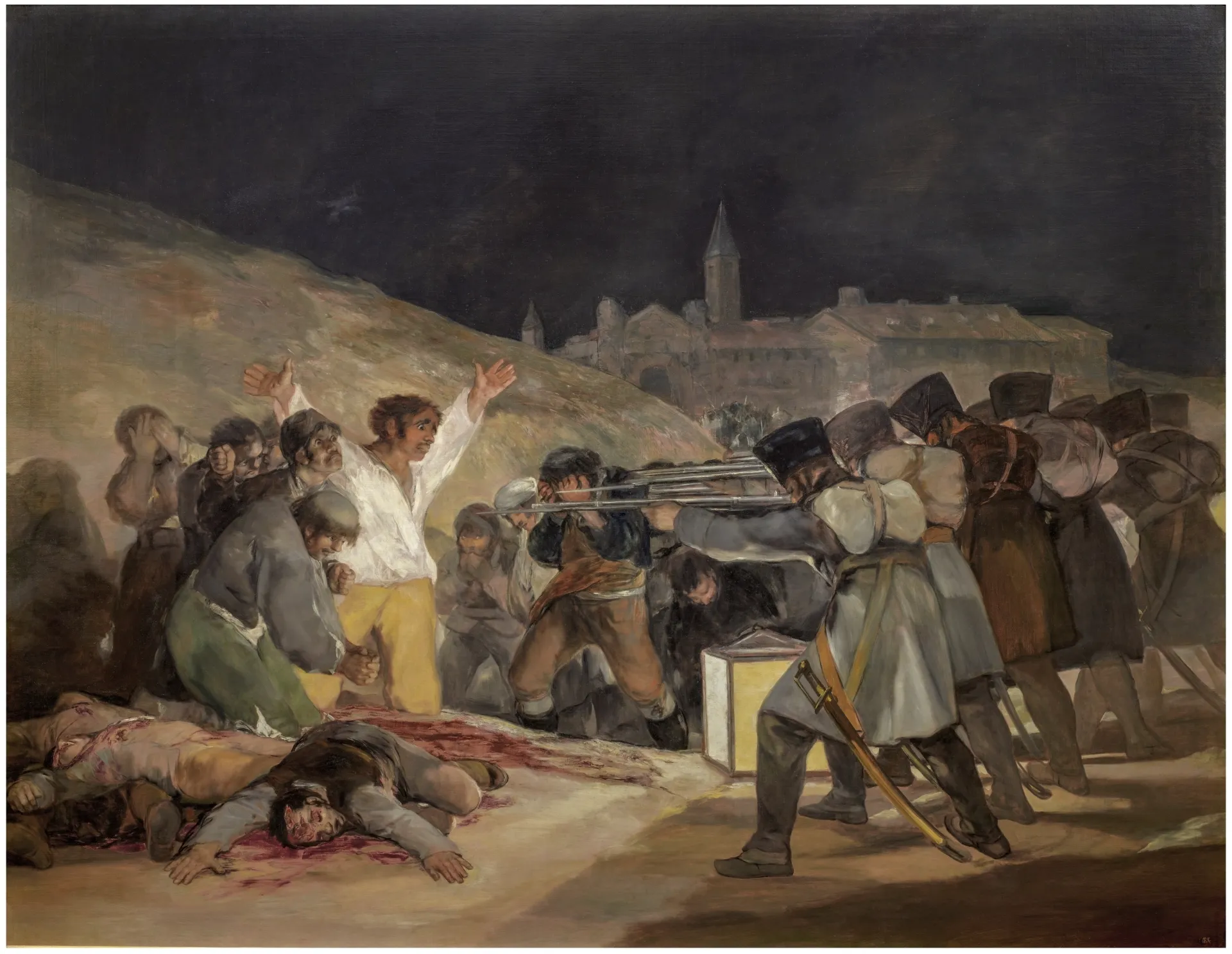
Goya at Prado is a journey from court elegance to existential fracture.
Core Arc to Follow
- Court portraiture and controlled representation
- Public violence and moral witness
- Late darkness and internal rupture
Landmark Works
| Work | Reading Lens |
|---|---|
| The Family of Charles IV | Court image and uneasy realism |
| The Third of May 1808 | Violence and the birth of modern protest image |
| Maja paintings | Public/private duality |
Historical Context Notes
- Napoleonic invasion and social turmoil
- Crisis of monarchy and authority
- Transition toward modern subjectivity in art
Goya does not merely depict events. He stages moral discomfort.
Viewer Questions
- Where is empathy directed?
- How does light function as ethics, not decoration?
- Which figures are individualized, and which are reduced to type?
Reflection Checklist
- Compare one court portrait and one conflict scene
- Note one detail that feels modern
- Revisit your first impression before leaving
Extra Planning Layer
What to do before arrival
- Pick one primary goal: highlights, context, or deep study.
- Decide your maximum work count to protect attention quality.
- Keep a backup mini-route in case rooms are crowded.
On-site decision rules
| Situation | Best adjustment |
|---|---|
| A room feels overcrowded | Move to your next priority and return later |
| Energy drops early | Cut scope by 30% and add a seated pause |
| You feel rushed | Revisit one anchor work and skip secondary rooms |
Reflection prompts
- Which work changed after a second look?
- Which room felt easiest to concentrate in?
- Which artist would you follow on your next visit?
Quick FAQ
- How long should I reserve as buffer time? Add 20-30 minutes.
- Is depth better than quantity? Usually yes, especially on first visits.
- Should I revisit one work before leaving? Yes, memory retention improves.
Bottom Line
Goya at Prado is one of the strongest arguments for why painting remains politically relevant.
关于作者

Madrid Art Desk
这份指南写给那些希望获得比泛泛博物馆简介更有用信息的旅行者。它的目标,是帮助你带着现实的预期、实际的把握,以及足够的背景理解走进普拉多,从而既能欣赏你早已知道的杰作,也能享受当天现场发现的新惊喜。
Tags
Goya
Third of May
Prado
Spanish history
Comments (0)
Leave a Comment
Loading comments...